
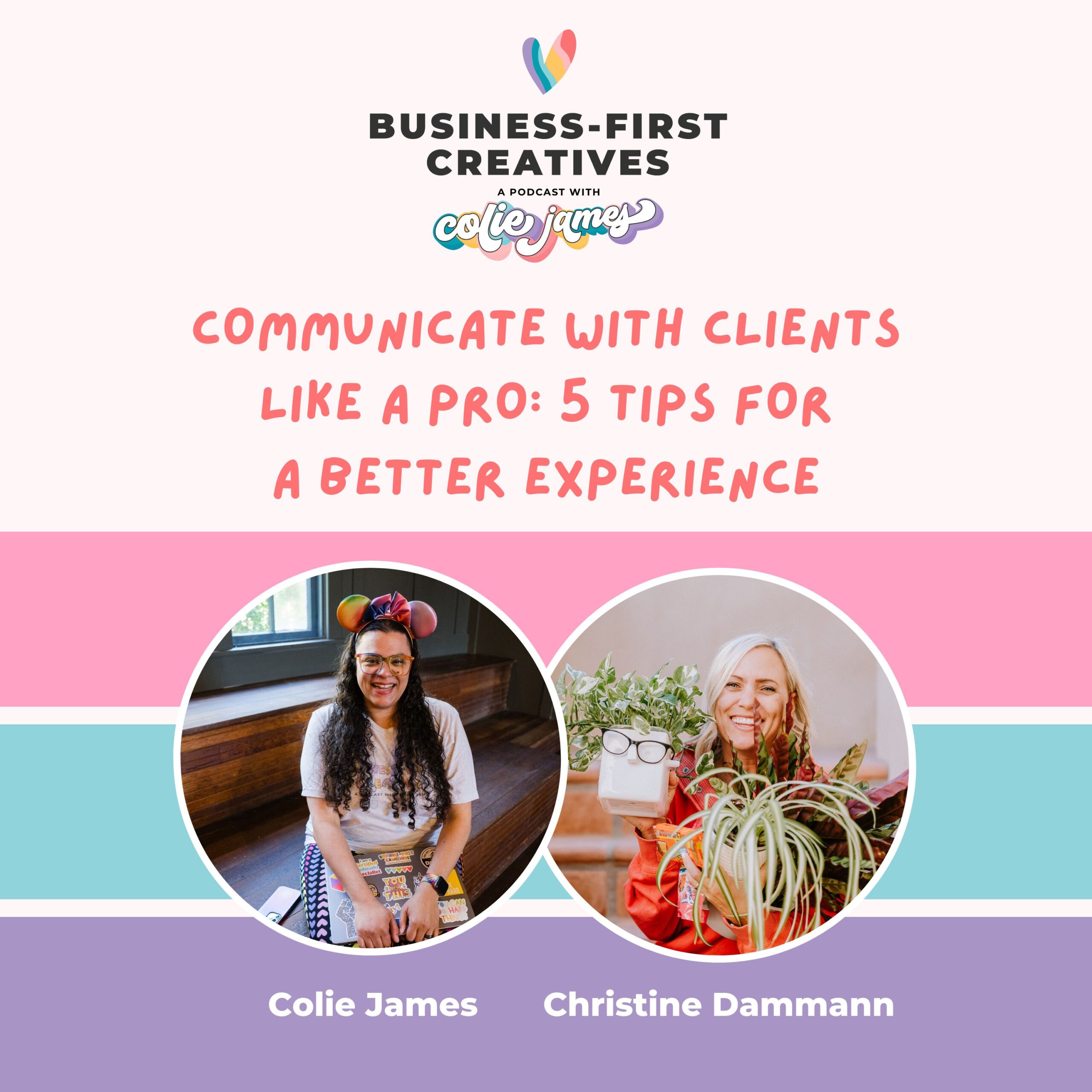



Is your lack of communication holding you back from creating an amazing experience for your clients? When it comes to building a great client experience, communication is everything, and my guest today knows how to communicate with clients that better than anyone.
Christine Dammann is a lifestyle family photographer based in sunny San Diego, California, who helps fun and adorable families create and savor memories. She also loves using what she’s learned in the past 16+ years in business to empower other photographers to build a business they love. When she’s not behind the camera or computer, you can find her walking on the beach, playing pickleball, tending to her collection of 59 houseplants, or cheering at one of her sons’ sporting events — likely with her husband and their beautiful English cream golden retriever, Birdie.
I’ve had the pleasure of helping Christine set up her systems inside Dubsado, so I’ve seen firsthand how intentional her communication is. Every email, guide, and reminder works together to prepare her clients for success. She’s the perfect person to walk us through what it looks like to keep your clients informed, confident, and excited from inquiry to gallery delivery.
In this episode, Christine breaks down five actionable ways to communicate with clients more effectively, from sending pre-session prep guides to setting boundaries around texts and response times. Whether you’re a family photographer or any kind of creative service provider, these simple shifts can transform the way your clients experience working with you.
LISTEN ON YOUR FAVORITE PODCAST PLAYER
Apple Podcast App | Spotify | Amazon | Youtube
Today’s episode is brought to you by my Love Your Leads private audio training! Are you providing an experience for your leads that sets an expectation on when they’ll hear from you, provides them with tools that will help them easily say yes and book you, while also making them feel seen and heard? In my private audio training, you’ll learn how to love your leads and get more booked clients through an automated booking process.
Find it Quickly:
1:09 – Meet Christine
2:57 – Tip 1 – Send a pre-session guide
9:55: Tip 2 – Set the tone with a warm welcome email
10:35: Tip 3 – Text like a pro, not a clingy ex
14:36: Tip 4 – Underpromise and overdeliver
20:25: Tip 5 – Ask for the review
Review the Transcript:
Colie: You are listening to the Business First Creatives podcast. I’m your host, Coley James. In each episode, you will hear real life stories behind the scene takes and practical insights for how to streamline and grow a creative business that brings you joy and a paycheck. Let’s get started. Hello. Hello, and welcome back to another episode of The Business First Creative.
Podcast. I’m chatting with my friend and client, Christine Damon today, and she is gonna be telling us how to set up your clients for success with communication. So yes, someone else is gonna get on this podcast and tell y’all about communicating with your clients just like I do. Christine, welcome to the podcast.
Thank you. Thank you for having me. So I know what’s inside your client experience because I helped you set it up in dub sodo. But I love that you wanted to come and talk about this today, because I do feel like your system prepares your clients throughout the entire process in a way that I don’t often see when I’m on the back end of a photographer’s business.
So first, Christine, introduce yourself. Tell people where you’re located and what kind of photography you do.
Christine: Awesome. Okay. My name is Christine Damon. I’m located in San Diego, California. I’m a lifestyle family photographer. I help fun and adorable families create and savor memories, but I also help photographers build a business that they love through mentoring, and I love to be people’s cheerleaders and help them reach their goals and success.
Colie: I will say she is a fantastic cheerleader. You guys should see every time I’ve ever met Christine in person and we’re doing like, you know. Uh, head shots of each other. Hers are always so much fun and they remind you of a cheerleader so much ’cause she’s usually jumping in the air.
Christine: I will preface, I am not a cheerleader, I was a runner, but I just, I like to be happy and I like to be happy with other people.
Colie: Well, and I think happiness comes from you and your website and really your entire brand. So I think that that is very fitting. Yeah. Thank you. Oh my gosh, I love it. I mean, and I am a little jealous, you guys all know I hate being outside, but maybe if I lived in San Diego with Christine and I got to photograph families on the beach, maybe just maybe I would feel differently.
I mean, maybe not, let’s be honest, but also. I mean, she’s so close. Maybe she could photograph people at Disneyland. I mean, I could live in San Diego. That would be fun. And go to Disneyland on like a weekly basis. I’m sorry. Right. We are getting so off topic. So I know that you’re gonna be sharing this podcast in the form of like five actionable tips.
Mm-hmm. And so. Everyone listening, this is gonna be a little bit more structured than the normal podcast that I do, and that’s okay. So I’m gonna ask her for each of these tips and then we’re gonna kind of chat about them. Sure. So, Christine, what is the first actionable tip that you want to give people about setting their clients up for success?
Through the communication.
Christine: Okay, so the first tip is stop waiting for magic wand. Send a pre-session guide so our clients aren’t mind readers, but they are stress magnets. Give them a guide that covers what to wear, how to bribe their kids into smiling, what to expect at the session. Because the biggest worry for a lot of new time clients is they don’t know what to expect, so they feel even more stressed.
If we can help them feel prepared, they’ll avoid. Feeling panicked and like looking at us all like awkwardly, you know? And you’ll avoid getting any panicked emails at midnight the night before, like wondering what to do, set them up for success. I had a pediatrician that used to answer my questions before I had them.
He’s like, okay, now your infant is this age and he’s going to eat, play, sleep instead of eat. Sleep play. I’m like, that’s why he wasn’t falling asleep after he ate. Like I didn’t know that was going to change. So I like to answer the questions before they have them. And sending a prep guide is a beautiful way to do that.
And it can be pretty, and you can show examples of your work and you can have it as an unlinked page on your website. So then you get more SEO traffic as well.
Colie: Okay. So when someone mentions a prep guide, number one, I always feel like people are like, okay, but like that sounds like a lot of work and like a lot of writing and a lot of.
Pictures and I already spent like all of my energy creating my website. I don’t have enough information or I don’t have everything that I would need in order to create a prep guide. So how long did it take you to create the, the current version of your prep guide that you send clients?
Christine: I mean, I don’t think it took me that long.
You can sort of gather up the things that you would prepare people with, like what to wear if it’s an in-home session. Like do you want them prepared before you show up? What kind of music or should they play music when you show up? Things that help them relax. I’ll be honest, my first style guide I bought from another photographer as like a template, so then I just filled in my version of it and that was even easier.
And then over the years. It’s changed and changed and changed based on what I. You know, trial and error, what you want your clients to know.
Colie: And I mean, that’s a really good tip about templates, guys. You can probably find templates for this, for your website, like if you wanted to put it as a hidden page like Christine does on her show at website.
I’m sure there are templates out there that you can get. I know for a fact you can also get templates for Canva because I have a few that I have. Personally bought for my clients in order to edit it and customize it and put it into their dodo as a link in an email as like part of their client experience process, if you will, a little bit more dated is you used to be able to buy templates that you would create in Photoshop.
And I’m gonna say, I don’t want anybody creating PDF prep guides anymore. You want a prep guide? That can be live and can be customized and edited as you go. So as Christine mentioned, it took her a while to get to her current version, and every time she had something to add or update, she would do so. But if you’ve got like all of these copies of the PDF floating around, you’re not able to give people the most updated information as they need it.
So templates are good. But please don’t create PDFs.
Christine: I think it’s also easier for a client to access a link rather than look for the PDF download. They can just, mm-hmm. Find the link again in the email or ask you to send it again, or, you know, it’s just an easier way, in my opinion, I.
Colie: Yeah, it is. So how do you figure out what to include in there?
Because you already said what to wear, which, you know, I find hysterical because the only thing that I tell my clients is, please let the children wear whatever they want. I do not wanna show up to your house after you have had an hour long battle with your. Kids because they didn’t wanna wear what you wanted them to wear.
Like tears are no bueno. But besides the style tips, ’cause I feel like everybody is like, oh, I, I get the style tips, like I do that. What are the other things that you think people should include that help make the process easier for their
Christine: clients? Sure. So I have my style guide open right now. My style guide is my outdoor prep guide.
Mm-hmm. So. I have the fashion tips, which some people won’t need, but then how to prep your spouse. And that could be as much as like, I let my husband go play golf the day before, or I give him a beer before when we’re getting ready. I let them know that we’re gonna have fun, kind of like what the session’s gonna be like.
So that. They know what to expect. We’re gonna cuddle, we’re gonna have fun. In my in-home guide, I have a spot that tells ’em like, please be ready. By the time I show up where we’re gonna be shooting in their house. I talk a little bit about lights, things that photograph, well, if we’re gonna be in an in-home session, I wanna talk about like activities that might photograph Also, they could have some of those prepared.
The biggest thing for me is like, we’re just gonna have fun. So don’t stress.
Colie: Don’t stress. I love that. I feel like you want to give them information, but you want to give them information that calms them. Yes. And not make it like a to-do list. Like, oh my gosh, I have to do this and this and this. I remember the first time that I had an in-home session, my honey-do list for my husband was like, legitimately two to three pages.
There were so many things including. We had never painted up to our ceiling. Our bedroom, our bedroom had like 14 feet walls. And so when we bought the house, I put very bright colors everywhere in that townhouse, but like there was a good seven inches from the ceiling down where we had never painted. And I was like, um, I need all of that done before they come.
But in general. Like you don’t wanna do that. Right. You wanna make it relaxing. You wanna make sure that they understand that everybody’s going to enjoy themselves. Exactly. Okay. One more question before we move on to tip number two. Sure. What, at what point are you sending the pre-session guide?
Christine: I’m sending the pre-session guide as soon as they’ve booked.
So they’ve paid their. Retainer. They filled out their contract and it’s an automatic email automations that you made sure was set up and it, it basically says, thank you so much. Your session is booked. I’m so excited, and in case you need it, here is a style guide with suggestions of what to wear. Here’s a prep guide to help you prepare.
And then they have from whenever they booked until their session is to look at it as many times as they want. Look at it right away. Look at it before you know, they can kind of do with it what they want.
Colie: Yeah, and I would just add in like Christine sends hers immediately after they book, but that is not the only time that you should send this guide.
No, like you should send it a couple times just in case they’ve lost the link. Anytime you can do something to make your client’s life easier, which is to provide this link in almost every single email, that’s a great idea before the session so that they can just click on it. I would highly recommend that.
Okay, Christine, let’s move on to tip number two. Right? What is it?
Christine: So set the tone with a warm welcome email. So just like I said, they paid the retainer, they completed their contract. They get a warm welcome email. Mine has the prep guide, but I also say like, Hey, you’re in good hands. I’ve got you covered.
Include a sprinkle of excitement about their session. You can also let them know you’re thinking ahead, like sending a style guide, how to coordinate outfits, but basically it’s just a small step that builds trust and makes them feel like they’re taken care of immediately.
Colie: Yeah. Let’s move on to step number three.
I’m, I think we’re gonna talk more about this welcome email, but I do wanna go through the steps because I feel like I’m gonna have more to say about that welcome email after we hit a couple more steps. Okay. So what is step number three?
Christine: Step number three is text. Like a pro, not a clingy X. So. I don’t text my clients a lot because I don’t want that to be our main form of communication.
I wanna be able to track everything in email, but I will text when I get an inquiry just saying like, Hey, I sent the email with all the information. If you didn’t get it, check your spam folder. And then I’ll also send a quick text the day before the session or the morning of the session saying like, Hey, happy shoot day.
I’m so excited to see you. Um, we’re gonna have so much fun. And that just lets them know that like you’re thinking of them, if for any reason they forgot about the session, they’re like. Oh yeah, it’s here. If they have any last minute questions or if they’re asking questions over email and then I’m out and about on my day and maybe don’t see the email, like I tell them the day of the session text is the best way to communicate with me.
Colie: Yeah, I mean, the thing about texting is a lot of people are like, okay, but you know, I don’t want clients to have my phone number because then maybe you’re not being the clingy ex, but maybe they become the clingy ex. So are you giving them your actual phone number or do you have like a Google Voice number?
Christine: I had a Google Voice number, but it wasn’t being used enough. So I use my phone number. Now, I have had clients that will text me late at night that will like inappropriate, not like no boundaries. Mm-hmm. And I just have learned over the years that I have to have strong boundaries. So if they text me late at night, I’m not responding.
I will respond with an email during business hours and I tell them, Hey, you know, email is the best form of communication and this is like not the day of the session, but email is the best form of communication. So I can track. Everything and make sure nothing gets lost in text. And then that has worked for me so far.
Like just keep my boundaries strong. Business hours, email, unless it’s the day of the session and I send the text. ’cause I also text a, I drop a pin mm-hmm. Of where we’re gonna be meeting just to make it even easier to get there and not, not have any confusion.
Colie: Yeah. And I mean, I know from your, do you still call them week of session emails?
Yeah. So guys, Christine. Is when I say that her prep is like fantastic. She sends an email to every single one of her clients the week of the session, and she shoots at like. I think it was 2020. A bazillion different spots, a bazillion different ones. And she has a week of session email prescripted as a template for every single location that she shoots at, and she sends that to them.
And it includes things like a map of where they’re going. I.
Christine: Sometimes it’s confusing.
Colie: Yeah. Tips for where to park and how to like walk to the actual location and just all of these things that really make the client feel taken care of. And because she’s sending it a week before the session, I mean, they have all of this information so that if they really feel like they wanna go to the location early.
And just make sure that they know where they’re going, they can. So I love that email. And while she did not mention it as part of her five tips, I wanted to make sure that I mentioned it because since I worked with Christine, I’ve actually had a couple of other people that have like these location specific guide emails is what I’ll call them.
That gets sent the week before a session so that everybody is on the same page, and I love that you text them and you send them the pin because that’s even helping them more to get to the location, but it’s also making them feel like if there is a problem, your phone number is right there. There in their text messages and it’s not even buried from like weeks or months ago.
’cause you’ve sent this text message to them the day before or the morning of so that if they get caught in traffic, if someone gets sick, if anything happens, they can contact you and not feel like they are searching for information inside of their emails.
Christine: Right. Yep. Yeah, just helps people feel taken care of.
I love when people follow up with me or send a a reminder because I mean, who reads anymore? So I appreciate follow up, so I like to send those as well. And my week of email is sort of like that.
Colie: All right. Let’s talk about tip number four.
Christine: Okay. Tip number four is under promise over deliver. But don’t overwork yourself.
So a lot of people probably already do this, but I tell clients their gallery’s gonna be ready in four weeks, but then I try to deliver it in two. So it’s like a surprise, you know, you’re over delivering. They’ll be thrilled. You’ll look amazing, but we’re not going to tell them it’s gonna be ready in one.
And then. Be freaking out, you know, because then something comes up, you get a sick kid, you whatever, your computer breaks, and then you’re apologizing. You know, like, no, just, it’s gonna be six weeks. Hmm. And then they’re like, oh my gosh, that was so fast. It was in three, where some people might be delivering it in one, but hey, that’s not me.
Colie: That’s not me that, that’s not me either. So when is it that you are communicating the editing timeline is what I lovingly refer to it as. When are you communicating this to your clients, or I should say how many times and in what spots?
Christine: Multiple times. It’s in the very first email with all the information, the package information, turnaround time.
Blah, blah, blah. It’s in the week of email, I believe. It’s like, and then four weeks after your session, four weeks or less after your session, you’ll receive a gallery link. I tell them in person when we’re leaving the session. That’s another thing. A big thing that I didn’t put in my five tips is like when we leave the session, I tell them what’s going to happen next.
I’m like, okay. So now I had so much fun with you guys. I’m so excited to see these images. I’ll send you a sneak peek as soon as I can and when the whole gallery is ready. I’ll send you a link. You can send it to family and friends. Everybody can download ’cause I’m all inclusive, yada, yada, yada. Mm-hmm. And I explain it all in person.
And then in the delivery email I also tell them that they can send it again. That’s not a turnaround time, but.
Colie: I want you to really think about the experience you’re providing to those who inquire with you. Are you setting an expectation for when they’ll hear from you next? Providing them the tools to easily say yes and book you while also making them feel seen and heard.
I. If you’re not sure, make sure you subscribe to my private audio training where we talk about how to love your leads and get more booked clients. You can subscribe@coleyjames.com slash leads and I’ll walk you through how to automate your booking process. That’s coley james.com/leads.
So I have a question because I can’t remember from your setup. Do you do a day after email or do you only tell them when you’re leaving the session?
Christine: I only tell them when I’m leaving the session. You probably did set me up with a template, like a post session workflow that honestly I haven’t used. But
Colie: it’s a good thing to have.
I mean, so, and here’s the reason that I ask that guys, is because I know that you guys have heard me say on this podcast before that it’s really important to send a day after email to make sure that people are reminded of what that editing timeline is. Because chances are, if you are not communicating it in a week of email, like Christina’s, the last time that they saw your editing timeline was probably when they booked you.
And for me, it would be months before the session for you, it might only be weeks. But regardless, it’s not something that they remember at the time of the session. Right. And so, you know, you’ve just had this amazing, you know, experience with them. And then they’re like, okay, and so how long do I have to wait for the images?
Mm-hmm. And then that’s when like. You feel the need to like reach out to your photographer and be like, okay, are my images ready yet? I feel like as long as you’re communicating to them the editing timeline at the end of the session, whether you do it in person like Christine or you do it in an email the next day, you just need to make sure that by the time the session ends that they have recently been reminded of what that editing timeline is.
Because I will tell you from my clients and my. Well, my clients, as in Christine, not my photography clients, but I know from other photographers that if you communicate that to them near their session, they are way less likely to continuously contact you after the session to inquire about the status of their photos.
Christine: I totally agree, and I don’t know about you, but I’ll put all this information in all these different emails and then when they come back to me and ask, I’m like, did they not read anything? No, people don’t read, myself included. So tell them again, send a day after email. You’re absolutely right. Like I had so much fun with you.
Or you know what? I send a sneak peek. Mm-hmm. And if I am really able to, and on top of it, it will be that night or the next day. And that would be a great time too, to be like, the rest of your gallery will be ready in X amount of weeks.
Colie: Mm-hmm. And I will say this has nothing to do with Christine, but the thing that I also add when I was sending sneak peek emails is every once in a while I would edit like a few images really quickly as I was downloading the cards, and then they might not be edited in the exact same way.
That the final gallery is like, maybe the rest of the gallery required me to edit the tones a little differently or whatever it was. So in that sneak peek email, I would often say these are a few that I, you know, I edited quickly when I was downloading the cards. Just so that you know, these might not be the exact edits that end up in your final gallery, because one time I, that’s when, and I ended up changing like the blue tone because there was something funky about one of the rooms that we shot in and it just didn’t look right.
And so she was like, Hey, this looks really different than the sneak peek that you sent me. And I’m like, yeah, because I edit. I was editing something from like the living room. Then when I went in your bedroom, I realized those couldn’t be edited in the same way. Yeah. So if there’s a chance that you will edit your sneak peeks differently than your main gallery, I would just highly recommend that you put that information inside that sneak peek email.
I.
Christine: Good point.
Colie: Alright, Christine, give it to me. What’s tip number five?
Christine: Alright, tip number five is make the ask because reviews don’t write themself. So sometime in your workflow post session, send a thank you email with a link to write a Google review for you. So make it simple, breezy, guilt-free because like it’s not.
An expectation, it’s a bonus in my opinion. And just say something like, if you loved your session, and I hope you did, I’d love for you to share your experience on Google. It helps other awesome families like you find me and whatever else you wanna include, you know? What is so funny,
Colie: guys, I’m laughing because I’m looking at her notes and she says, and keeps my coffee addiction fully funded.
I mean, I won’t say that anymore because I don’t really go to Starbucks anymore now that I have my own fancy espresso machine, but I will totally, I think I’m gonna go add. Keeps my Disney addiction fully funded. There you go. I’m gonna go add that to an email
Christine: more specifically in that email. There are things that I ask for that help your SEO and I actually have a freebie, four photographers where they can use my exact email template.
I have over 105 star Google reviews from using this template. It helps include keywords. Mm-hmm. That then specifically when other people are looking for San Diego Family photographer. I pop up on page one.
Colie: Guys, we are gonna have that linked in the show notes. And do you know that I have never thought about giving people keywords to make the Google reviews more found.
I mean, that’s freaking brilliant. I gotta be honest.
Christine: And also when people go to write a review, sometimes they’re like, yeah, I love write a review. I don’t know what to say. This helps them even know what to say because I’m saying if you loved your experience. Include this, include that like, or what you loved, you know?
Okay. I don’t wanna give too much away. It’s a freebie. Mm-hmm. Go grab it. Go grab it.
Colie: Well, and the funny thing is, I’m gonna say not photographers, because I have experience from the other side of the aisle. What I will actually specifically do is give them three sample questions that they could answer, and that would be more for someone like you.
Like if you loved me setting up your Dodo, yeah. I would love it if you would give me a review and I ask for it on the certified specialist directory, just because that pushes me up in like the order that were found. But I say, and if you don’t know what to say, try answering one of these three questions.
Yeah. And they’re very specific questions related to, you know, whatever systems type things I set up in your dato, but it just, you never want someone. To number one, feel obligated to give you the review. Mm-hmm. But number two, not know what to say because then you’ll end up with a hundred plus Google reviews that are like, Christine was awesome, she was
Christine: great.
Okay. It was fun. Well, why, like, are you gonna book? Because somebody said she was great. Maybe, but you’re gonna book more if they’re like, she was great with kids, she was organized, she, you know, all the things. She helped me feel prepared and relaxed. It was the most fun session we ever had, like. I don’t feed those things.
They just write them they, you know what I mean
Colie: them? Yes, I do. Okay, so we’re just going to recap the five really quickly. The first one is send a pre-session guide and don’t delay. The second one was set the tone with that warm welcome email. The third was text, like a pro, not a clingy X. You wanna make sure that you are communicating with them so that they have your phone number, but also make sure that you communicate your clear boundaries.
I realize I just texted you, but really email is still the best method of communication. Yes. Number four was to under promise and over deliver because none of us want to be overworked. And then your fifth win was to make sure that you ask the review. So I’m gonna come back with my dato cap on and say, okay, Christine.
When are we asking people for the reviews?
Christine: You can ask for it any time. You can ask for it multiple times. You could ask for it in your day after email. You could ask for it in your gallery delivery email. What I personally like to do is I send my gallery. But then I send a surprise gift to my clients.
They don’t know what’s coming. They don’t know what it is, and I switch it up. But when I send that gift, my hope is they are so surprised and delighted and reminded of what a great experience they had with me. Then I send an email saying like, Hey, if you have a few minutes, this would really help me out.
This is why it would help me out. Mm-hmm. And here’s a link. To make it very easy and all my, you know, other things from my template review email, and then they can be like, and I envision them like this, like getting the, oh my gosh, we live so much. Yes, we wanna write a review and we’re gonna click on it and they’re gonna write it.
Mm-hmm. Now they don’t have to, it’s not, I’ll send you a gift if you write me a review. No. It’s just a surprise and delight moment. And then I send, when I know that gift is delivered, that’s when I send my review email personally. Yeah.
Colie: I mean, and I think. When I’m asking like people like you for reviews, I think you understand why I want a review.
I mean, you understand the concept of SEO and Google reviews and how much it boosts where you show up in searches, but I feel like a lot of our clients on the photography side. Do not know. And so it is important to communicate why you want the review specifically on Google, because a lot of them don’t understand that, you know, the more Google reviews you have, the more it pushes your photography website to people who are looking for a San Diego family photographer.
So. Yeah, there’s no such thing as like telling them, you know, too much information. But I do feel like in this case, it helps to educate them on why it is so important, and then I do really feel like they will be more likely to give you that review.
Christine: Right. I totally agree.
Colie: So these five tips have been absolutely amazing.
I’m just wondering if you have any more hidden gems, anything that you feel like is different about your client experience that helps disseminate information or prepare them for the session that we haven’t already discussed.
Christine: Well, something that I might do that is a little bit different is when, as soon as they inquire, they get all the proposal information in an email right there, but it’s not technically their proposal yet.
So then they can see. The cost, the package information. And then at the very bottom it’s like, yes, I wanna book. And there’s a calendar link and that prompts them to pick a date. And then that tells me, Dodo tells me somebody’s booked and they booked this date. And then I can go in and like, um, trigger the proposal to be sent for them to complete everything else.
Also, if it’s like not an ideal situation, and I can tell that for whatever reason, like they want a studio and it’s somehow communicated, I can be like, wait, don’t pay anything yet. I’m not do, I’m not necessarily the person for you.
Colie: And I will say one of the reasons that I feel like this works for you is because you do not do consultation calls.
Correct. And not everyone needs to do consultation calls in order to prepare your clients. There are ways to communicate the same information without having people schedule a 15 minute consultation call. Right. And Christine does it.
Christine: If they request a call, I am more than happy to get on the phone, but I don’t wanna get on a consult call and my clients don’t seem to either.
Okay.
Colie: Christine, it was fabulous to have you on the podcast. I do wanna make sure that everybody knows where to find you on the internet, mostly because your last name is a little complicated to spell. So where can people find you and what’s the best social media outlet to reach out to you on?
Christine: Uh, hey.
Awesome. My website is christine damon.com, but my last name is spelled. Very strangely, it’s pronounced Damon, but it’s DAM as in Mary, M as in Mary, a N as in Nancy, N as in Nancy. And on Instagram. I’m Christine Damon Photography. I’m also on Facebook. I have a YouTube page which has some videos of like how tos, but it has a lot of client slideshows.
’cause that’s how I send them a slideshow. Oh, that’s another thing I do. I send a slideshow right before they get their gallery. I know, I, I don’t have pick time, but I know pick time. You guys also do that in there. Yes. Um. Yeah, follow me on Instagram. Let’s be friends. I mean, cheer each other all. I mean, she’s a very friendly
Colie: person.
Guys,
Christine: we could talk plants if you like
Colie: plants.
Christine: We could talk about
Colie: dogs. Like, you know, I killed them all. Not the dogs. The plants. Thank you for clarifying. I mean, I felt the need to. Alright everyone, I hope that by listening to a lifestyle family photographer like Christine, you are. A little bit more interested in expanding your client experience to include communication throughout the process to make your clients more comfortable in front of the camera and throughout the process.
I hope that you’ve enjoyed this episode. See you next time. Thanks for listening to The Business First Creatives podcast. For more information on this podcast including show notes and links to the video podcast, please visit coley james.com/podcast. Are you loving the podcast? Sharing is caring. Until next time.
I’m going to share Christine’s communication tips below, but if you’re reading this, I know you might need a little extra help putting these tips into action. Grab my Emails that Convert FREE Guide and I will walk you through exactly what you need to write emails that feel good, build trust, and get results!
1. Send a Pre-Session Guide
Stop waiting for a magic wand. Send a pre-session guide.
Our clients aren’t mind readers, but they are stress magnets. The biggest worry for most new clients is that they don’t know what to expect. When we give them a guide that explains what to wear, how to prep, and what will happen during their session, we take away that uncertainty and help them feel calm and prepared.
A pre-session guide sets the tone for everything that follows. It gives clients the tools they need to feel confident instead of panicked, and it saves you from getting those late-night emails full of questions. Think of it as answering the questions before they even have to ask them.
When Christine first started, she bought a template from another photographer and filled in my own details. That made it easy to get started without spending hours writing from scratch. Over the years, she’s updated it again and again, refining it through trial and error as she learned what her clients actually needed to know.
Today, her guide covers the basics like what to wear, but it also includes things that make the process easier for families, including how to help spouses relax, what kinds of activities work well for in-home sessions, and gentle reminders about light or spaces that photograph best. The goal isn’t to overwhelm them with a to-do list. It’s to help them feel prepared and excited for what’s coming.
And please, don’t make your prep guide a PDF. Create a live, editable version instead. This could be an unlinked page on your website or a digital guide in Canva. That way, you can update it anytime and clients can access it easily. It even helps boost your SEO if it lives on your site!
In her workflow (that she set up when we worked together), the prep guide goes out automatically right after a client books. The email says, “Your session is booked! Here’s a style guide and prep guide to help you get ready.”
But don’t just send it once and be done. One of the best ways to communicate with clients is to know what they need before they do, to answer their questions before they have to ask them. That means linking the prep guide in future emails as a quick reference, so they never have to dig through their inbox trying to find it.
When you make preparation simple and stress-free, your clients show up relaxed, and that’s where the magic really happens.
2. Set the Tone with a Warm Welcome Email
Once a client has paid their retainer and signed their contract, she immediately sends them a warm welcome email. It’s simple, but it makes such a difference in how clients feel right from the start.
That first message sets the tone for your entire working relationship. Hers includes her prep guide, but it also reminds clients that they’re in good hands, that she’s got them covered, and that she’s already thinking ahead.
She also likes to add a sprinkle of excitement about their session and let them know what’s coming next, whether that’s their style guide, outfit coordination tips, or reminders about what to expect. It’s a small step, but it builds trust fast.
When clients feel taken care of from the very beginning, they’re more relaxed, more confident, and more excited to work with you, and that energy carries through every part of the experience.
3. Text Like a Pro (Not a Clingy Ex)
When it comes to texting clients, less is more. Christine doesn’t use text as her main form of communication because she likes to keep everything organized and trackable in email, but that doesn’t mean she avoids texts altogether.
In fact, she’ll send a text when she gets a new inquiry, just to say, “Hey! I sent an email with all the details. If you don’t see it, check your spam folder.” It’s a small touch that helps clients know she’s on top of things and makes sure nothing gets lost in their inbox.
She also texts the day before or the morning of a session to say something like, “Happy shoot day! I’m so excited to see you, we’re going to have so much fun.” It’s a quick, friendly reminder that lets them know she’s thinking of them, and it gives them an easy way to reach her if they have last-minute questions or updates.
For anyone nervous to communicate with clients using your personal number, you’re not alone. Christine used to use Google Voice but found it wasn’t worth keeping up (so that is an option if you don;t want clients to have your phone number). But now, she personally uses her regular number.
However, the key is having strong boundaries. If a client texts late at night, don’t reply right away. Instead, respond during business hours via email and gently remind them that email is the best way to reach me so nothing gets lost in text.
The only exception is on session days. That’s when she tells clients texting is absolutely fine, especially if they’re running late, can’t find parking, or just need help finding her. She’ll even drop a pin with the exact meeting location so there’s no confusion.
It’s all about balance. Texting shouldn’t replace your workflows, but used strategically, it can make your clients feel cared for, seen, and supported, without you feeling like you’re glued to your phone.
4. Under-Promise and Over-Deliver (Without Overworking Yourself)
A lot of photographers already do this without realizing it, but for Christine, it’s an intentional part of her workflow. She will tell clients that their gallery will be ready in about four weeks, but her goal is to deliver it in two. That way, it feels like a happy surprise for them instead of an expectation she’s struggling to meet.
What she doesn’t do (and you shouldn’t either!) is tell clients their gallery will be ready in a week when she knows that’s not realistic. Life happens — kids get sick, computers crash, things take longer than expected. Giving yourself buffer time keeps you from constantly apologizing and gives your clients the joy of an early delivery when everything goes smoothly.
Christine also makes sure she’s communicating my turnaround time clearly and often. It’s listed in the very first email when a client books, and again in her week-of-session email where she reminds them that their full gallery will be delivered within four weeks (or less). She also mentions it in person at the end of every session. She will say how much fun she had, that she’ll send a sneak peek soon, and when to expect the full gallery.
Let’s be honest, people don’t always read every email. So the more you repeat important details, the fewer questions you’ll get later.
If you don’t talk about your turnaround time in person, send a quick day-after email instead. It’s an easy way to say, “I had so much fun with you!” and remind them when to expect their images. Clients will appreciate knowing exactly what’s coming next, and you’ll spend less time fielding “just checking in” messages.
5. Make the Ask (Because Reviews Don’t Write Themselves!)
After every session, don’t forget to ask for a review!
Sometime in your post-session workflow, send a thank-you email that includes a direct link for clients to leave you a Google review. Keep it simple and low-pressure. It’s not an expectation — it’s a bonus.
Christine likes to say something like, “If you loved your session (and I hope you did!), I’d love for you to share your experience on Google. It helps other awesome families like yours find me.”
Inside her review email, she will also give clients a little guidance on what to include. That way, they’re not stuck thinking, “I don’t know what to write.” She will also suggest they mention specific parts of their experience such as how relaxed they felt, how I worked with their kids, or what they loved most about their photos.
That not only helps them write a more meaningful review, but it also improves her SEO. When people search for a San Diego family photographer, those keywords naturally appear in her reviews and help me show up on page one. It’s just another way she uses communication to support my business long after the session is over.
If you’re a photographer looking to communicate with clients more effectively, especially when it comes to asking for feedback, Christine created a free guide that walks you through exactly what to say (and what to include) to get glowing, search-driven reviews.
A thoughtful thank-you paired with a clear, no-pressure ask goes a long way. And if you make it part of your workflow, those glowing reviews will start rolling in consistently.
Writing Client Experience Emails For Better Communication
Every part of your client experience is built on communication, not just during the session, but before and after it, too. From sending prep guides and warm welcome emails to setting boundaries and asking for reviews, every message you send shapes how your clients feel cared for.
Christine’s approach is a perfect reminder that you don’t need complicated systems or endless emails to create an amazing experience. You just need to communicate with clients intentionally, clearly, and consistently.
And if you want help, that’s exactly what I help with in Email Like You Mean It. Inside, I’m giving you a complete Client Communication Library (every email mapped, written, and ready to use) so you can respond faster, sound consistent, and actually book more clients. You’ll also get access to a few of my custom GPTs to help you get it done fast (head here to learn how Erin got 33 emails done in a weekend if you need more convincing).
When you anticipate their needs, answer questions before they have to ask, and keep things simple and stress-free, your sessions run smoother and your clients can truly enjoy the experience you’ve created for them.
Mentioned in this Episode
Emails that Convert (free guide!)
Connect with Christine
Website: christinedammann.com
Instagram: @christinedammannphotography
Christine’s Freebie: christinedammann.com/google-freebie
Youtube: youtube.com/@christinekdammann


Top Categories








© 2022-2025 Colie James


Close
Start dates available for Q1 2026
Enter your contact information to join the interest list for Systems in Session. You will get early access as spots become available with a booking bonus!
