
A podcast where you join me (Colie) as I chat about what it takes to grow a sustainable + profitable business.
Business-First Creatives Podcast
CRM Guru, Family Filmmaker, and Host of the Business-First Creatives podcast. I help creative service providers grow and streamline their businesses using Dubsado, Honeybook, and Airtable.
Hey, I'm Colie


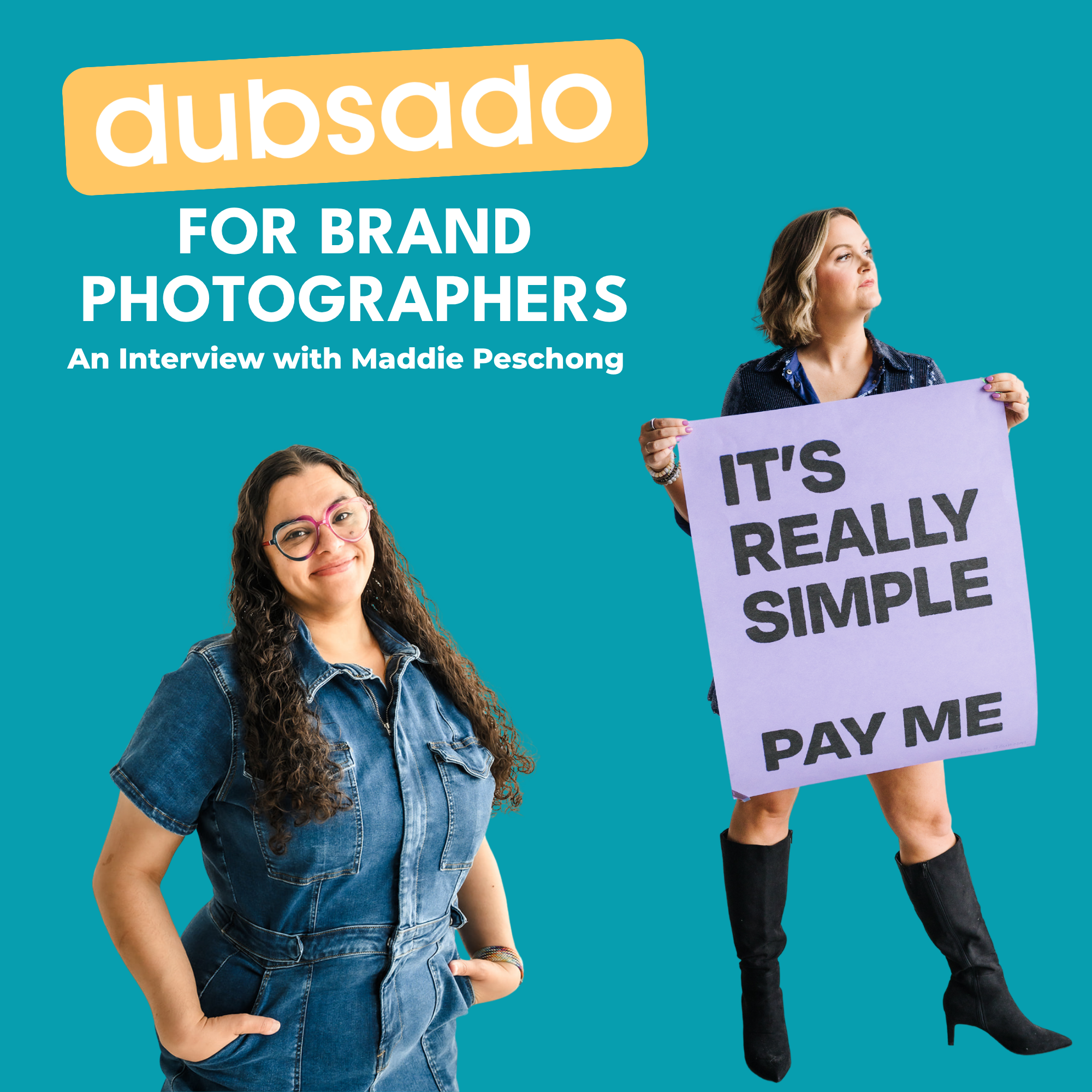
Have you ever thought your Dubsado was pretty good — and then had someone show you exactly how many holes were in it? That’s what happened to Maddie Peschong, a brand photographer based in Sioux Falls, South Dakota. She came to me for a Dubsado setup thinking she mostly just needed a better-looking proposal. She left with a fully automated client experience, more confidence in her pricing, and the freedom to actually step away from her inbox during the summer.
This is one of my earliest episodes and one of my favorites — because Maddie’s story is still one of the clearest examples of what’s possible when you stop patching the holes and just fix the system. Four years later, she’s still using everything we built together.
If you’ve been using Dubsado for years but still feel like you’re doing more manual work than you should, I think you’re going to hear yourself in a lot of what she shares.
“There is a before Colie and after Colie — and my confidence is so much higher because now I understand the full capacity of what Dubsado can do and how much it can help me.” — Maddie Peschong
What you’ll learn in this episode
- What it actually feels like to wake up on a summer morning and not have to open your email first
- Why a pretty proposal isn’t enough — and what actually reduces booking friction
- How Maddie went from manually tracking follow-ups to fully automated workflows across every stage of the client journey
- The specific thing she was missing in her inquiry process that was costing her leads
- Why she was able to charge $2,500–$5,000 with more confidence after rebuilding her system
- The one mistake she made right before we worked together that cost her a $6,000 client — and what she now does differently
Here are the highlights…
[00:43] About Maddie’s business
[03:33] Her CRM experience prior to Dubsado
[05:42] Automation before working with Colie
[07:22] Creating high-end proposals for a high-end service
[09:31] Tweaking the system on her own
[13:17] Creating a workflow for each phase of your customer journey
[17:32] Using Dubsado in a totally new way
[20:43] Utilizing videos in Dubsado
[22:06] Gathering reviews + testimonials from clients
[24:04] Maddie’s biggest fuck-up and what she learned from it
[29:09] Importance of pre-work for your VIP Day
[35:52] Maddie’s overall experience working with me
What a Dubsado setup actually looks like for brand photographers
Maddie had been using Dubsado for five years before we worked together. She wasn’t starting from zero — she had canned emails, a few automations, schedulers, workflows, payment plans. She thought of herself as someone who knew Dubsado pretty well.
But when we got into it, what we found were what she calls “invisible holes” — gaps in the process she hadn’t noticed because she’d been filling them manually. Her inquiry process had an auto-responder, but nothing after that was automated. She knew her proposals could be better, but had told herself that was okay. And she had no system for following up when someone started the booking process but didn’t finish it.
That last one matters more than most people realize. It happens: a potential client fills out the proposal, signs the contract, and then doesn’t pay the invoice. Life got in the way. They couldn’t find their credit card. They meant to come back and forgot. Without an automated reminder the next morning — “hey, you did the first two steps, but you’re not officially booked yet, here’s your invoice link again” — those people quietly fall off your calendar.
Now Maddie has workflows for the inquiry stage, the onboarding stage, and the delivery stage — and each one automatically moves clients into the next phase without her having to touch anything.
“My Dubsado wasn’t that bad — but there were just these invisible holes happening everywhere. Now I feel like everything is good. It’s like a sinking ship with all the holes plugged.” — Maddie Peschong
The proposal she wants to marry
Maddie shoots brand photography and VIP days, with packages ranging from $2,500 to $5,000. That’s a price point where the client experience before the shoot needs to match the quality of the work itself. And before her system rebuild, it didn’t.
She was relying on referrals and her social media presence to do the selling for her — which works, but only up to a point. What she was missing was a proposal that arrived in a potential client’s inbox and said: yes, everything you heard about this experience is true, and here’s the proof.
We built her a fully custom branded Dubsado proposal — one that includes a video, a FAQ section, a timeline of the session process, and her personality baked in through custom GIFs she made herself. The day after we finished, she said she wanted to marry it.
Since then, she’s created variations for commercial photography and headshots — all based on the same foundation, tweaked for each offer. She did all of it herself, without coming back to me for help. And four years later, she told me on her podcast that she now regularly books $5,000+ commercial projects using a two-minute Loom walkthrough of that same proposal — upselling clients from headshots into full brand sessions before she’s even picked up a camera. Hear how she does it here.
If you’re curious what goes into a proposal like this, I have Dubsado proposal templates you can start from — or read more about what makes a Dubsado proposal actually convert.
“I want to marry the proposal — it’s so beautiful. And I think that there’s a confidence level there for me too, because now I feel like I can depend on my internal processes to say, not only are you coming from a referral, I’m also sending you this proposal that says this is worth the money, this is a high level service, you can expect a lot.” — Maddie Peschong
Why the FAQ section in your proposal matters more than you think
Maddie does a discovery call before sending proposals — so she answers a lot of questions live. She wasn’t sure a FAQ section would even be necessary.
But in the months leading up to our work together, she’d had a string of communication issues with clients. After she saw the FAQ built into her proposal, it clicked: those questions were being asked again because the answers weren’t anywhere clients could reference after the call. They weren’t trying to be difficult — they just forgot, or wanted to double-check, or showed the proposal to a spouse who had questions too.
A proposal that answers the most common questions before the client has to ask them removes the friction between “I’m interested” and “here’s my credit card.” If someone has to email you three more times before they feel comfortable booking, some of them won’t bother.
“I knew that my inquiry process was not as automated as it could be — I told myself that was okay. But now that I have seen how powerful it can be, I can truly sell my services.” — Maddie Peschong
The $6,000 mistake she made right before we worked together
Maddie has been in business for ten years. She knows better. And yet — she had a client lined up for somewhere between $2,500 and $6,000 worth of work over six months. The contact was someone she knew. Things felt comfortable, so she didn’t send a contract right away.
When she finally sent it a week before the shoot, the client said they couldn’t sign contracts without running it through their legal team — a process that takes weeks. The shoot didn’t happen. Maddie was out the job, the income, and all the time she’d put into planning.
Workflows aren’t just for your clients. They’re for you too. They make sure every single client goes through A, B, C, D before they’re officially on your calendar — so that a good rapport doesn’t accidentally become a reason to skip the steps that protect you.
Want to see what that booking process looks like when it’s fully built out? Read how to create a 5-minute booking process or listen to how one of my other clients simplified her entire booking workflow.
“I can wake up in the morning and not open my email until quiet time after lunch and not feel guilty about that — because I know that people are moving through the workflow they need to move through.” — Maddie Peschong
What Maddie does now that she didn’t do before
Summer mornings without email — Maddie takes most of the summer off because her kids are home from school. She can now wake up, make coffee, and not open her inbox until after lunch — because she knows her inquiries are getting auto-responses, her proposals are going out, and her clients are moving through their workflows without her.
Automated review requests — Instead of manually chasing testimonials, Maddie now has a form that goes out automatically after delivery. It asks real questions about the experience, and ends with a request for a testimonial. She always has the responses — even when Google decides not to publish the review.
GIFs in her emails — She made custom GIFs of herself that now live inside her workflows. Clients meet her personality before they meet her in person.
Videos in her proposals — She had video content sitting unused. It’s now woven into her proposals in a way that tells a story, not just plays a clip.
Project status automation — Every client moves through stages automatically. She can open Dubsado at any point and see exactly where every lead and client is without having to remember or cross-reference anything.
Ready to build a system like Maddie’s?
Maddie came in thinking she needed a nicer proposal. She left with the whole system rebuilt — and four years later, she’s still using it. That’s how this usually goes. Once you start pulling on one thread, you see how much further the gaps go.
If you’ve been using Dubsado for years and still feel like you’re doing more manual work than you should be, it might be time to look at the whole picture. A great place to start: if you’re not sure your CRM is even set up right for your business, read my post on 4 signs you might need a CRM — or if you’re still deciding between platforms, check out my full HoneyBook vs Dubsado comparison.
Ready to have your own before-and-after? Learn more about Systems in Session and let’s build it.
And if you want to hear where Maddie is now — she came back on Business-First Creatives to talk about breaking the vicious visibility cycle and how content marketing and client systems work together to keep your calendar full.
“Workflows are not just for your clients — they are for you and your clients together. They make sure that everybody has a consistent experience and that you stay on top of all of the communication.” — Colie James
Frequently asked questions
You don’t need to know how to code. Maddie created multiple additional proposals after we worked together entirely on her own — for commercial work and headshots — just by working from the template we built together. The design is already done; you’re swapping out copy, FAQs, and timeline details. If you want a starting point, check out my Dubsado proposal templates.
Almost always yes. Maddie had been using Dubsado for five years before we worked together and still had significant gaps. The difference between using Dubsado and using Dubsado well is usually a handful of specific automations most people don’t know exist — not a complete overhaul.
An automated inquiry workflow. Most photographers have something set up for after a client books, but very little automating the process of moving a lead from “interested” to “booked.” That’s where the most leads fall off — and it’s usually the easiest thing to fix.
Maddie estimates about three to four hours, broken up over a few sessions. The prep work is what makes the build itself hands-off for you — the more thorough you are upfront, the more I can build without having to interrupt your day with questions.
Links mentioned in this episode
What makes a Dubsado proposal actually convert
How to create a 5-minute booking process
Simplify your 5-minute booking process (case study)
HoneyBook vs Dubsado comparison
Make more sales as a brand photographer (Maddie’s follow-up)
Breaking the vicious visibility cycle with Maddie Peschong
Guest Bio
If she’s giving you her elevator pitch, she’d tell you she’s a Sioux Falls, South Dakota, brand photographer and educator for creative women.
If she’s giving you the girls-night-out over wine version:
She’s a photographer who went from busting her butt working nights and weekends to running a six-figure business that allows me all the time she needs to have mid-day dance parties in the kitchen with her kids or kick back on the couch and watch The Office with her husband.
You may be wondering – how did she do it? The short answer? By showing up and being herself.
She believes more than anything that this is the best way to build an irresistible brand and that it’s totally possible for you to do the same thing.


Signature Series


Your business works, but your backend is costing you.
A 4-Part Audio Series for service-based business owners who are ready to upgrade their “just fine” client experience, unlock higher pricing, increase referrals, and grow more sustainable revenue—without overworking behind the scenes.
Get the FREE 4-part audio training series
Systems That Sell


© 2022-2025 Colie James


Close
Start dates available for Q3 2026
Join the waitlist and get first dibs, unlock your FREE 10-minute audit + a surprise bonus if you grab a spot for Q3. Doors Open June 18th.
