





Here’s a gripe I’ve had for years: HoneyBook’s lead forms let you present the service, get it scheduled, and get it paid — but the contract was always an afterthought, a separate step in a separate email that came after the money.
Many photographers don’t want to collect a single dollar from anyone for a service without a signed contract already in place. Mini sessions are the perfect example. Not every photographer wants a contract for a 20-minute mini, but if you do, that one missing piece meant a janky workaround. Client books, client pays, and then you’re back in your inbox hoping they actually open and sign the contract you should have had before you ever took their money.
This week, HoneyBook came to play.
They rolled out a whole new suite of tools under the banner of HoneyBook for Photographers, and after digging through what’s actually live (not just what’s “coming soon”), a few of these are worth your attention. And this is quite exciting for photographers using HoneyBook to manage their business.
Mini Sessions Without the Follow-Up Chase
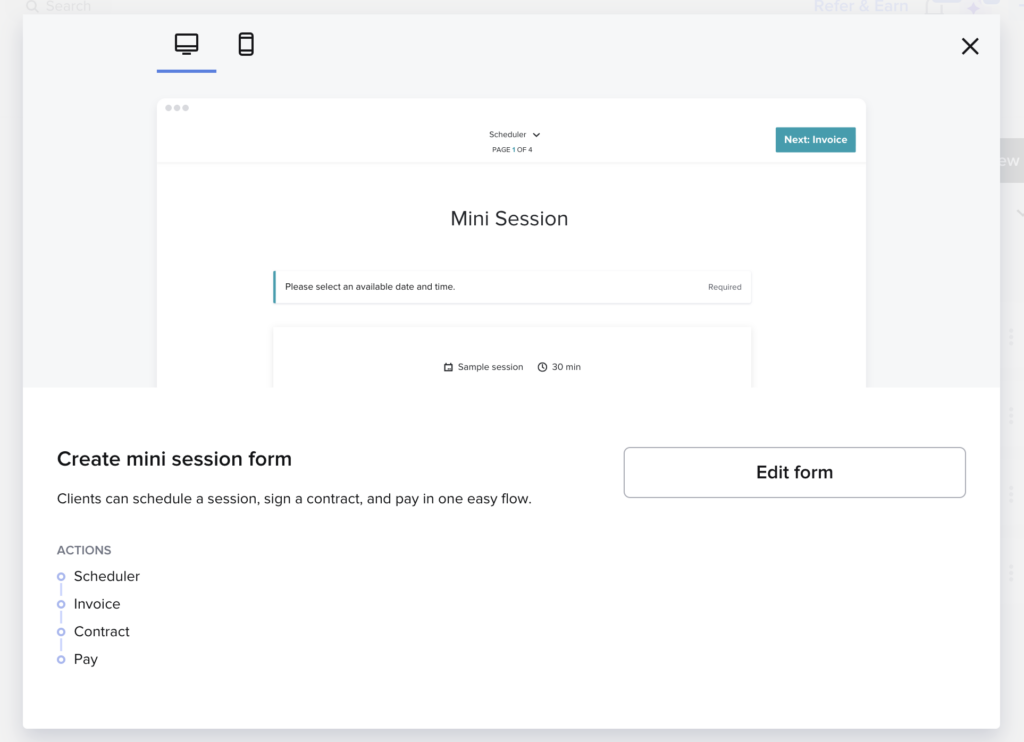
The headline feature is new mini session forms that bundle the service, the contract, and the invoice into one public-facing form. A client sees the offer, picks their slot, signs, and pays — no back-and-forth, no separate emails from you stitched together to fake the same experience.
This is the thing I’ve wanted from HoneyBook (and Dubsado, honestly) for a long time. If you run mini sessions and you’ve been cobbling together a lead form with a scheduler plus an automated contract step after payment in a separate email, this collapses it into one form your client completes on their own.
I forwarded HoneyBook’s announcement email straight to my Systems in Session clients who are on HoneyBook the day it landed in my inbox. I’m not an “immediately implement every new tool” kind of strategist — but I do want my clients informed about all the new shit, so they can decide for themselves what’s actually worth their time.
Galleries Are Now Native to HoneyBook
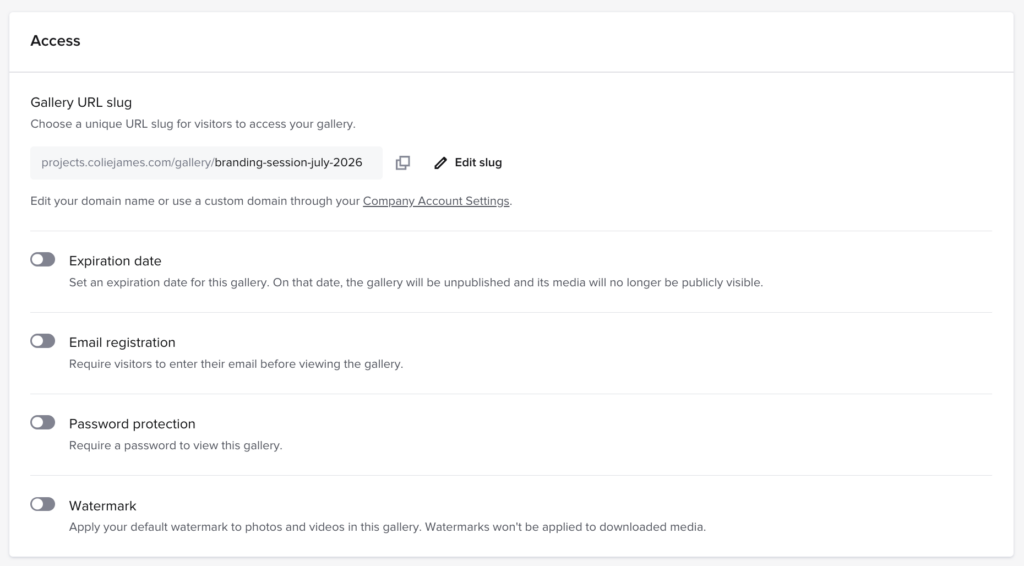
Here’s the part I think is going to raise some eyebrows: HoneyBook now has built-in galleries.
I’ve watched a lot of software try to become the “one tool that does everything” for photographers. Usually it goes the other direction — gallery software adds CRM features and tries to work its way backward into your workflow. Pixieset did it. CloudSpot has some CRM-ish features baked in. Session has had galleries built into its bookings for a while now too, and it’s exactly the kind of tool photographers try to stretch into a full CRM replacement, conditional logic gap and all. This is the first time I’ve seen one of the two CRMs I recommend most — HoneyBook or Dubsado — go the other way and build gallery delivery in-house.
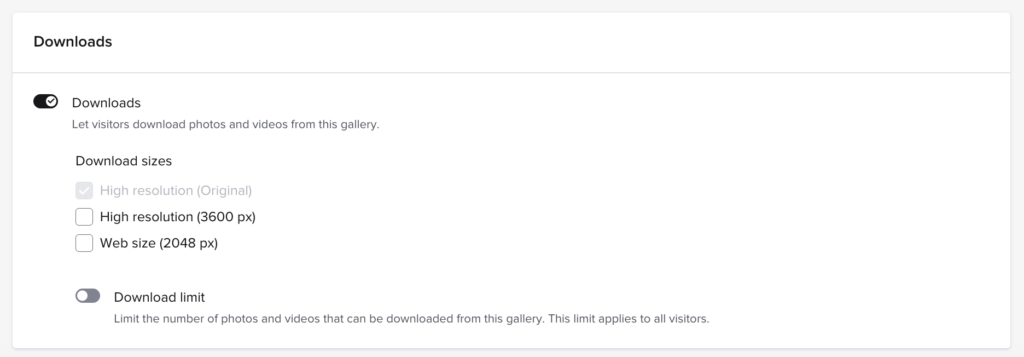
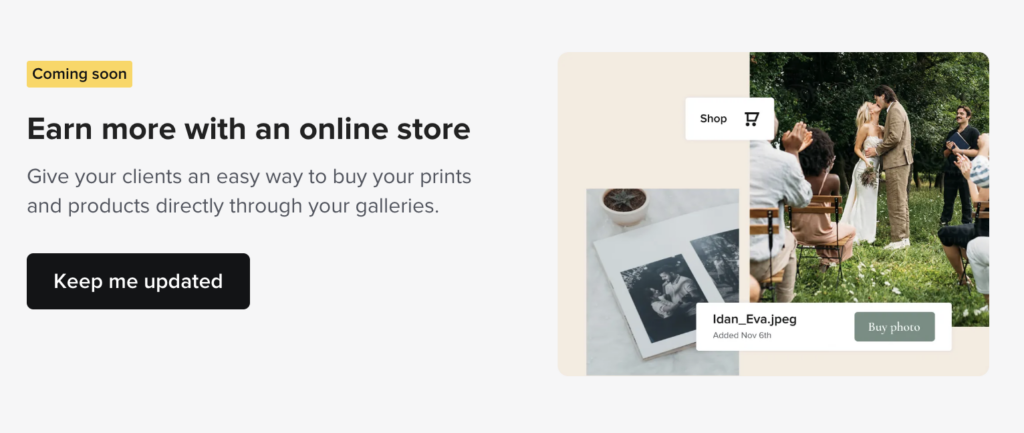
Right now, HoneyBook’s galleries are basic and there are no automation triggers or actions around galleries at this time. You’re not getting the marketing automation depth or the storefront experience Pic-Time offers — not yet, anyway. But HoneyBook has confirmed (via a Threads post and inside the feature itself) that an online gallery store is in the works. If you are currently an all-inclusive photographer, not selling products in an online gallery, this might be an immediate YES as you can use it to deliver galleries to clients and allow them to download high-resolution images right now!
Here’s my honest, purely-my-opinion take: when that store ships and it’s genuinely competitive, I think it puts real pressure on the HoneyBook + Pic-Time partnership. I talked about this partnership on stage at WPPI a couple years back as one of the smartest integrations in the space for photographers — HoneyBook handling the CRM side, Pic-Time handling delivery and print sales. If HoneyBook starts building a real in-house alternative to the thing its own partner does best, that’s an interesting position for both companies to be in. As of now, the integration is active and Honeybook users can still claim a free 3 months of Pic-Time. I just think it’s worth watching what happens going forward.
Two-Way Texting and Tap to Pay
Two smaller but genuinely useful additions:
Two-way texting is coming to HoneyBook, so client conversations that used to happen off-platform (and off the record) can live inside your project instead. I just know my concierge-level service providers are JUMPING FOR JOY at this 👏🏽
And Tap to Pay finally made it to HoneyBook. Dubsado users have had this since their mobile app for almost a year now, so this closes a gap for HoneyBook users have been side-eyeing for a while.
What’s Coming Next
A few things HoneyBook has flagged as on the way but not live yet: more control over how your emails look when they land in a client’s inbox, and improvements aimed at making your content more discoverable in AI search results.
I’ll circle back once these actually go live.

Should You Switch to HoneyBook for This?
No. Or at least — not automatically, and not just because of this announcement.
If you’re already running a fully built-out system in Dubsado, Sprout Studio, or 17hats, this isn’t a reason to tear it down. Please think it through before you migrate anything. A shiny feature announcement is not a strategy. And if you’re weighing whether to leave HoneyBook altogether, my step-by-step guide to switching from HoneyBook to Dubsado lays out what that actually takes before you commit to it, going either direction.
But I’ll be honest: these are the kind of features that make a photographer turn their head. If you’re choosing your first CRM, or you’re already a HoneyBook user trying to decide whether to lean in further, this update matters. I’ve gone back into my Dubsado vs. HoneyBook client experience comparison and updated it to reflect where things stand now, so if you’re actively weighing the two, start there.
And if you’re coming at this from the other direction — you’re currently on Pixieset Studio Manager or Session and wondering if these new features put HoneyBook in the running — it’s worth understanding what you’re actually leaving behind first. I’ve broken both down: Pixieset Studio Manager vs. a real CRM and Session as a booking tool vs. a CRM. Same conditional logic gap and flexible automations missing in both, regardless of which platform you land on next.
If you’re curious how these new booking features fit into a client experience that’s already working — not just a form that looks nice — that’s exactly what we map out inside The Experience Edit.


Signature Series


Your business works, but your backend is costing you.
A 4-Part Audio Series for service-based business owners who are ready to upgrade their “just fine” client experience, unlock higher pricing, increase referrals, and grow more sustainable revenue—without overworking behind the scenes.
Get the FREE 4-part audio training series
Systems That Sell


© 2022-2025 Colie James


