



Welcome to the Episode
Y’all, I had a total aha moment this year, and I’m bringing you into it in real time. There’s a group of you who don’t want less involvement with your clients — you want more, and you’ve been sitting there wondering if systems even have a place in that. Spoiler: they absolutely do, and today I’m telling you exactly what that looks like.
What You’ll Learn in This Episode
- Why “systems” don’t have to mean “automate your clients out of the process” — and what they should actually be doing for you instead
- How to identify if you’re a concierge-level service provider (and why that changes the systems conversation entirely)
- The real reason schedulers still matter even when you’re the one booking the date on a live call
- How to stop managing client details on sticky notes, spreadsheets, and your Notes app — without handing that control over to automation
- Why being the “bottleneck” in your business isn’t automatically a bad thing
- What’s coming in the next episode, where a real client shares how she went from refusing every system to relying on several
The Perspective Shift I Didn’t See Coming
For years, I’ve talked about systems as a way to save you time by taking things off your plate — automated emails, self-service schedulers, workflows that run without you touching them. That’s still true for a lot of my clients. But this year, I kept running into the same conversation, over and over, in audits and client calls: “Colie, I don’t want to send an automated email. I want to call my client. I want to be the one doing this for them.”
At first, I’ll be honest, that felt like it was working against everything I teach. It took me months to see it differently. And then it hit me: I’m one of you.
I automate almost everything in my business, but there’s one thing I have never been willing to hand off, no matter how many people tell me I could serve more clients if I did — my one-to-one calls inside Systems in Session. I’ve helped close to 40 people through that offer, and I could absolutely scale it by recording more videos, building out a bigger resource hub, and stepping back from the calls. I won’t do it. That’s the piece of the experience I refuse to give up, even knowing it makes me the bottleneck to growing that offer.
That’s when I realized: some of you feel exactly the same way about your businesses. You’re not looking for less involvement with your clients. You’re looking for a way to stay this involved without losing your mind.
Meet the Concierge-Level Service Provider
I’ve started calling this group of you “concierge-level service providers,” and if that’s you, this episode is for you specifically.
You want to do the in-person consultations. You want to walk your clients through their ordering session yourself. Some of you are literally driving to your client’s house to help hang the art on their wall. Your version of a luxury experience isn’t “the client never has to think about anything because the system handles it” — it’s “I am personally there for every step.”
Here’s the thing: that’s a completely valid way to build a service-based business. But it doesn’t mean you get to skip systems. It means the systems need to be built differently — for you, not around removing you.
Systems Aren’t Just for Automating Your Clients — They’re for You
This is the redirect I want you to sit with: the goal of systems, in your case, isn’t to save time by doing less for your clients. It’s to keep you consistent.
If you’re currently managing every client’s status on paper, in a spreadsheet, or in your phone’s Notes app, you are not sustainable, even if your clients can’t see the cracks yet. You’re spending far more energy than you need to just to keep track of where everyone is in your process. That’s not the luxury experience you’re trying to create — that’s you quietly burning out behind the scenes while still trying to look effortless.
I want to build you a system that centralizes everything about a client’s project in one place, so when you want to check on someone, you open their file and immediately see what’s done, what’s in progress, and what’s next. I want automated reminders that tell you when it’s time to call a client, instead of relying on your memory or a sticky note. The automation isn’t replacing your personal touch. It’s protecting your ability to deliver it consistently.
Why You Still Need a Scheduler (Even When You’re Booking the Date Yourself)
This came up on a call this week with a husband-and-wife team I’m helping build a premium portrait experience inside HoneyBook. One of them asked me directly: if I already know the session date because we booked it live on the call, why would I still need a scheduler?
Here’s why. The scheduler isn’t there to make the client do the work. It’s there to trigger the confirmation email the moment you enter the date and time, and to queue up the reminder sequence for that appointment automatically. Without it, you’re the one manually writing that confirmation email and manually remembering to follow up with reminders, for every single client, every single time.
It also works as a fallback. If your client isn’t ready to commit to a date on the call — maybe they need to check with a partner first — you can send them the scheduler directly so they can choose a time that works once they’re ready. Either way, you get an automated way to log and track the appointment, instead of trying to hold it all in your head.
How This Is Different From the Clients I’ve Traditionally Helped
Most of the people I’ve worked with in the past wanted the opposite: less of their own time inside the tool, more of the experience automated on the client’s behalf. I’ve seen workflows with 30 steps and an approval button on 75% of them — not because the client wanted that many checkpoints, but because the service provider didn’t trust the system enough to let go. They want fewer touchpoints with clients so they don’t have to add more to their workload.
But you’re a different kind of client and the last thing you want is to remove yourself from the process. You’re just trying to stop white-knuckling it. And there are real systems we can build for that — ones that keep you organized and consistent without asking you to give up the parts of your business you actually love doing. Automations are still in these systems, but what they automate is different.
Even Concierge-Level Businesses Have Gaps
Here’s the part I want to be really honest with you about: being hands-on with every milestone doesn’t automatically mean your client experience is airtight. I talk about this a lot in the gap between your milestones and what your clients actually experience, but it applies directly to what we’re talking about today.
Milestones are checkboxes — discovery call, proposal, session, delivery. Concierge-level or not, you can hit every single one of those in person and still leave silence in between them. I’ve worked with photographers who had in-person consultations, in-person ordering sessions, even in-person delivery, and they still had months of quiet between the consultation and the actual session because nobody had mapped out what should be happening in that gap.
That’s the piece systems solve for you that showing up in person can’t. Being personally involved in every milestone is exactly what makes you a concierge-level provider. But the system is what makes sure nothing falls through the cracks in the space between those milestones — the reminder to check in, the note about what this specific client cares about, the follow-up that keeps the relationship warm even when you’re not actively in front of them. You don’t have to choose between being hands-on and being organized. You need both.
Coming Up Next: A Real Case Study
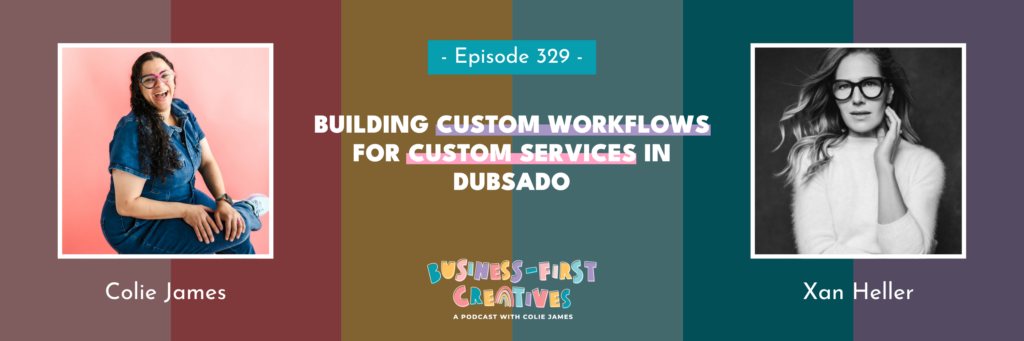
Next episode, I’m sitting down with one of my Systems in Session clients, Xan Heller, to talk about what this looked like in her actual business. Small spoiler: when we started, she fought me on almost every system I suggested. No to the scheduler. No to the proposal template. By the end, she had multiple schedulers and proposal templates in place as a fail-safe, and workflows that keep her on track without draining her energy on every single client.
Ready to Build This for Your Business?
If everything in this episode just described your business, I’m currently booking Q3 spots for Systems in Session, with start dates after August 12th. It’s a one-to-one offer, so we choose your start date together — it doesn’t run on a fixed calendar. And if you join by July 10th, you’ll get next week’s Experience Edit live sprint completely free, which gives you two extra weeks of support to map out your client journey and build the email templates that keep your clients informed every step of the way.
Links Mentioned
- Systems in Session — 1:1 done-with-you client experience system build
- The Experience Edit — live sprint (free bonus for Systems in Session clients who join by July 10th)


Signature Series


Your business works, but your backend is costing you.
A 4-Part Audio Series for service-based business owners who are ready to upgrade their “just fine” client experience, unlock higher pricing, increase referrals, and grow more sustainable revenue—without overworking behind the scenes.
Get the FREE 4-part audio training series
Systems That Sell


© 2022-2025 Colie James


